

Table of Contents
- 1. What Should Be Checked When the Valve Arrives at the Warehouse?
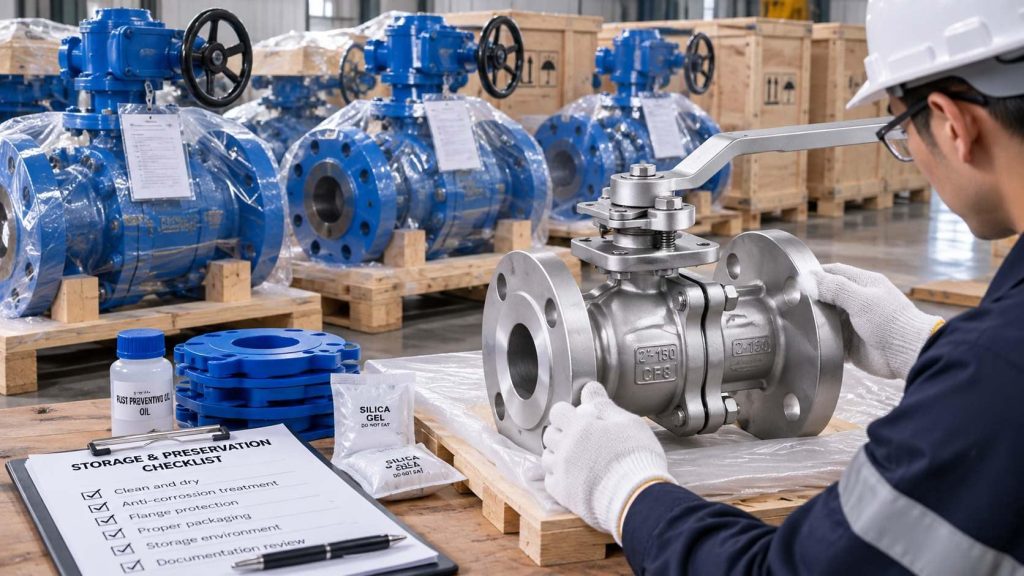
- 1.1 Check the Packaging Before Removing It
- 1.2 Match the Equipment to the Purchase Records
- 2. How Should Flange Faces and Internal Components Be Protected?
- 2.1 Leave Connection Protection in Place
- 2.2 Do Not Treat Internal Cleaning as Routine Warehouse Work
- 3. What Storage Conditions Are Suitable for an Extended Project Schedule?
- 3.1 Moisture and Handling Deserve Separate Attention
- 3.2 Should Stored Valves Be Operated Periodically?
- 4. How Can Preservation Records Prevent Problems During Installation?
- 4.1 Record Conditions That Could Affect Installation
- 4.2 Keep Damaged Equipment Out of Available Inventory
- 5. What Should Be Verified Immediately Before Installation?
- 5.1 Review the Valve’s Current Condition, Not Only Its Factory Records
- 6. Professional Technical Support from Miwival
- 7. Conclusion
- 8. FAQs
- 8.1 1. Should flange covers remain fitted during warehouse storage?
- 8.2 2. Is outdoor storage acceptable for flanged ball valves?
- 8.3 3. Does a stored valve need to be opened and closed periodically?
- 8.4 4. When is additional testing required before installation?
- 8.5 5. What should be done when corrosion is discovered before installation?